

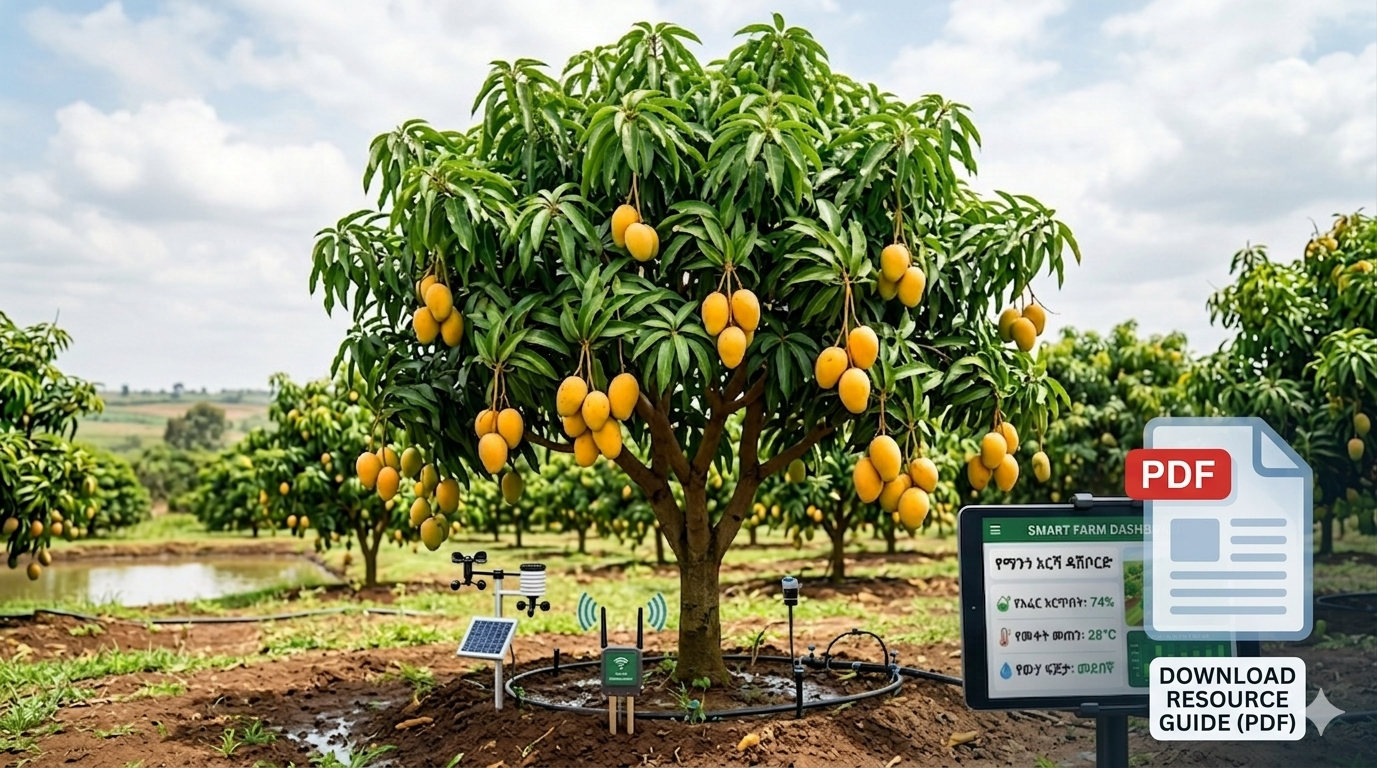
Agriculture is no longer just about seeds and soil; it is becoming a field driven by data. For farmers in Ethiopia, especially those dealing with the White Mango Scale (WMS), the challenge has always been timing. By the time you see the white patches on the leaves, the damage is often already done.
This is where Artificial Intelligence (AI) changes the game. Here is how AI-driven insights are helping us move from “reacting” to “predicting.”

1. Predicting Outbreaks Before They Happen
Pests like the White Mango Scale don’t appear randomly. They thrive when specific conditions—such as temperature, humidity, and leaf canopy density—are just right.
- The AI Advantage: Machine Learning models can now analyze years of weather data alongside pest logs.
- The Result: AI can give farmers an “Early Warning.” For example, if the system predicts a high-risk period in April for the Assosa zone, farmers can begin pruning and targeted spraying weeks in advance.
2. Precision at Your Fingertips (Image Recognition)
One of the biggest hurdles for farmers is identifying the early stages of infestation.
- The Tech: Using simple smartphone cameras, farmers can take photos of mango leaves. AI algorithms (like CNNs) analyze these images to distinguish between WMS and other issues like powdery mildew or nutrient deficiency.
- The Impact: This ensures that the farmer uses the right treatment, reducing the waste of expensive pesticides and protecting the environment.
3. Data-Driven Management Logs
At DigitalBJR, we believe that “what gets measured, gets managed.” Moving from paper notebooks to digital tracking allows for better long-term planning.
- Smart Logging: By recording pesticide applications (like Dimethoate or Thiamethoxam) and pruning dates into a digital system, AI can analyze which methods worked best for your specific orchard.
4. Why This Matters for Ethiopia
In regions like Benishangul-Gumuz, mangoes are a vital source of income and food security. The White Mango Scale has caused losses of up to 50–100% in some areas. By adopting “Digital Agronomy,” we can:
- Increase Yields: Stop pests before they destroy the fruit.
- Lower Costs: Spray only when and where it is absolutely necessary.
- Save Time: Let technology handle the monitoring so farmers can focus on growth.
Conclusion
The future of farming in Ethiopia is a partnership between the farmer’s experience and the power of AI. By using data to make better decisions, we are not just saving crops—we are securing the future of our agricultural economy.


